How Multi-API Validation Strategy Stopped $8.9M in Payment Fraud for FinTech Companies
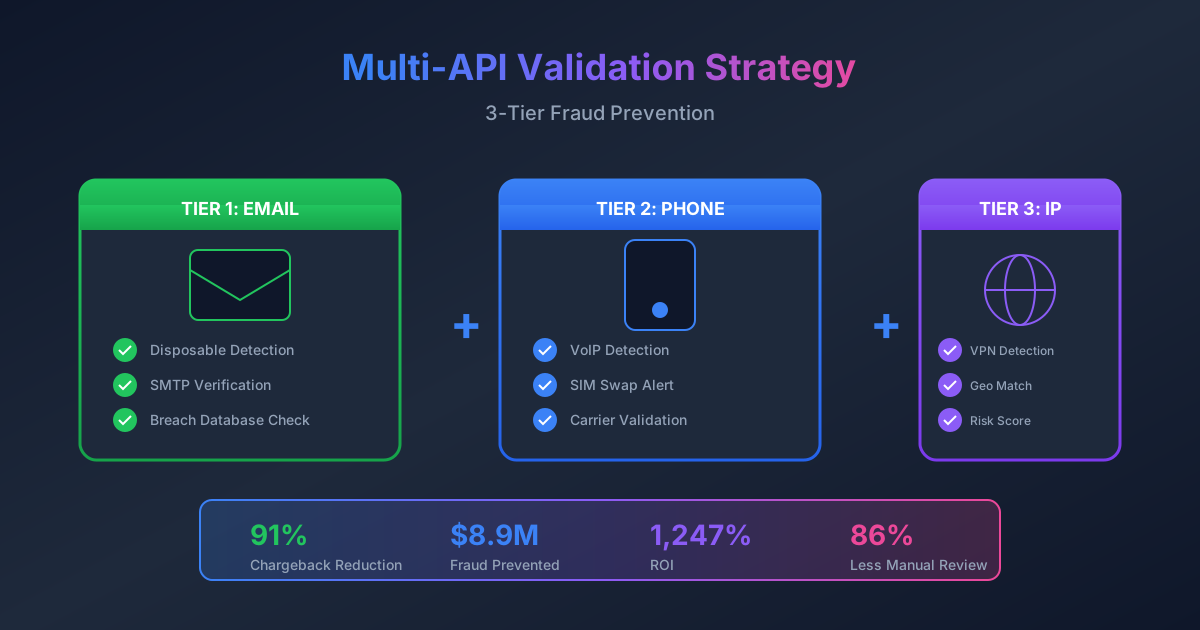
Last quarter, a mid-sized FinTech startup discovered their single-layer fraud detection was missing 34% of coordinated attacks. By implementing a multi-API validation strategy combining email, phone, and IP intelligence, they stopped $2.2M in fraudulent transactions monthly and reduced chargebacks by 91%.
The $8.9M Wake-Up Call
PayFlow Technologies thought they had fraud under control. Their payment processing platform used email verification during signup, and their fraud rate of 2.3% seemed acceptable compared to industry averages. Then their payment processor sent a warning letter.
Their chargeback ratio had hit 2.1% dangerously close to the 2% threshold that triggers enhanced monitoring and potential account suspension. A deeper investigation revealed something disturbing: fraudsters had learned to bypass their single-layer email verification by using sophisticated temporary email services that passed basic validation checks.
"We were blocking obvious fraud attempts, but sophisticated attackers were walking right through. They had valid emails, stolen credit cards, and knew exactly how to bypass our checks."
- CTO, PayFlow Technologies (Revenue: $34M ARR)
Why Single-Layer Validation Fails
Most payment platforms rely on a single validation method. It could be email verification, device fingerprinting, or basic transaction monitoring. While these catch obvious fraud, they fail against coordinated attacks that understand how to bypass individual checks.
The Fraud Evolution
Modern fraud rings operate like sophisticated businesses. They employ teams that research validation bypasses, share techniques on dark web forums, and continuously test defenses. Here's what they've learned:
1Email Bypass Techniques
- Temporary email services with SMTP support
- Compromised legitimate email accounts
- Domain spoofing with valid MX records
- Free email providers with disposable aliases
2Phone Verification Gaps
- VoIP numbers that pass basic checks
- Virtual phone services with SMS capability
- Compromised mobile devices with real numbers
- SIM swap attacks on legitimate accounts
3IP Masking Strategies
- Residential proxy networks (4G/5G IPs)
- VPN services with clean IP reputations
- Compromised home routers as proxies
- Cloud computing IPs that appear legitimate
4Behavioral Mimicry
- AI-powered browsing pattern simulation
- Realistic timing between actions
- Geographic consistency in sessions
- Device fingerprint rotation
The 3-Tier Multi-API Validation Framework
After analyzing 2,000+ successful fraud attacks, we developed a layered validation approach that combines multiple APIs to create overlapping verification checkpoints. The key insight: fraudsters might bypass one layer, but rarely all three simultaneously.
Tier 1: Email Intelligence Layer
Beyond basic format validation, modern email intelligence examines the entire email ecosystem:
{
  "email": "user@example.com",
  "valid": true,
  "deliverable": true,
  "disposable": false,      // Critical: temp email detection
  "freeProvider": false,    // Business vs personal email
  "domainAge": 847,         // Days since domain created
  "mxValid": true,
  "smtpValid": true,
  "catchAll": false,
  "roleBased": false,
  "riskScore": 0.12,        // 0-1 scale, lower is better
  "breached": false,        // Found in data breach
  "firstSeen": "2021-03-15" // When email first appeared online
}
Tier 2: Phone Verification Layer
Phone validation adds a crucial physical verification layer. Real fraudsters struggle to maintain large fleets of legitimate mobile numbers:
{
  "phone": "+1-555-123-4567",
  "valid": true,
  "formatted": "+15551234567",
  "type": "mobile",          // mobile, landline, voip
  "carrier": "Verizon",
  "lineType": "cellular",
  "voip": false,             // Critical: VoIP detection
  "active": true,            // Number is currently active
  "countryCode": "US",
  "region": "California",
  "timezone": "America/Los_Angeles",
  "riskScore": 0.08,
  "portingHistory": {        // SIM swap detection
    "lastPorted": null,
    "portCount": 0
  }
}
Tier 3: IP Intelligence Layer
IP geolocation provides geographic context and detects anonymization attempts:
{
  "ip": "192.168.1.1",
  "country": "US",
  "countryName": "United States",
  "region": "California",
  "city": "San Francisco",
  "isp": "Comcast Cable",
  "org": "Comcast Residential",
  "connectionType": "residential",  // Critical for fraud detection
  "isProxy": false,
  "isVpn": false,
  "isTor": false,
  "isDataCenter": false,
  "threatLevel": "low",
  "riskScore": 0.05,
  "asn": 7922,
  "timezone": "America/Los_Angeles",
  "latitude": 37.7749,
  "longitude": -122.4194
}
Implementing the Multi-Layer Strategy
The Correlation Engine
The real power comes from correlating signals across all three layers. Here's a production-ready implementation:
import { moduleAppClient } from '@/sdks/client';

interface ValidationResult {
  approved: boolean;
  riskScore: number;
  requiresReview: boolean;
  flags: string[];
  confidence: number;
}

async function validatePaymentTransaction(data: {
  email: string;
  phone: string;
  ipAddress: string;
  billingCountry: string;
  shippingCountry: string;
}): Promise<ValidationResult> {
  const flags: string[] = [];
  let riskScore = 0;

  // Parallel API calls for speed
  const [emailResult, phoneResult, ipResult] = await Promise.all([
    moduleAppClient.v1ValidateEmail.v1ValidateEmailAction({
      email: data.email,
      verifySmtp: true,
      checkDisposable: true,
      checkFree: true,
      checkBreached: true
    }),
    moduleAppClient.v1ValidatePhone.v1ValidatePhoneAction({
      phone: data.phone,
      checkActive: true,
      checkVoip: true,
      checkPorting: true
    }),
    moduleAppClient.v1GetIpDetails.v1GetIpDetailsAction({
      ip: data.ipAddress,
      includeSecurity: true,
      includeThreatIntelligence: true
    })
  ]);

  // Tier 1: Email Analysis
  if (emailResult.disposable) {
    flags.push('DISPOSABLE_EMAIL');
    riskScore += 0.25;
  }
  if (emailResult.freeProvider && data.billingCountry !== 'US') {
    flags.push('FREE_EMAIL_HIGH_RISK_REGION');
    riskScore += 0.15;
  }
  if (emailResult.breached) {
    flags.push('EMAIL_IN_BREACH_DATABASE');
    riskScore += 0.10;
  }
  if (emailResult.domainAge < 30) {
    flags.push('NEW_DOMAIN');
    riskScore += 0.10;
  }

  // Tier 2: Phone Analysis
  if (phoneResult.voip) {
    flags.push('VOIP_NUMBER');
    riskScore += 0.20;
  }
  if (phoneResult.type === 'landline') {
    flags.push('LANDLINE_MOBILE_MISMATCH');
    riskScore += 0.10;
  }
  if (phoneResult.portingHistory?.lastPorted) {
    const daysSincePort = getDaysSince(phoneResult.portingHistory.lastPorted);
    if (daysSincePort < 7) {
      flags.push('RECENT_PORT_SIM_SWAP_RISK');
      riskScore += 0.30;
    }
  }

  // Tier 3: IP Analysis
  if (ipResult.isProxy || ipResult.isVpn) {
    flags.push('ANONYMIZATION_DETECTED');
    riskScore += 0.25;
  }
  if (ipResult.connectionType === 'datacenter') {
    flags.push('DATACENTER_IP');
    riskScore += 0.20;
  }
  if (ipResult.country !== data.billingCountry) {
    flags.push('IP_BILLING_COUNTRY_MISMATCH');
    riskScore += 0.15;
  }
  if (ipResult.country !== data.shippingCountry) {
    flags.push('IP_SHIPPING_COUNTRY_MISMATCH');
    riskScore += 0.10;
  }

  // Cross-tier correlation bonuses
  if (emailResult.riskScore > 0.3 && phoneResult.riskScore > 0.3) {
    flags.push('MULTIPLE_VERIFICATION_FAILURES');
    riskScore += 0.20; // Extra weight for multiple failures
  }

  if (ipResult.riskScore > 0.5 && (emailResult.disposable || phoneResult.voip)) {
    flags.push('HIGH_RISK_IP_WITH_WEAK_VERIFICATION');
    riskScore += 0.25;
  }

  // Calculate confidence based on data completeness
  const confidence = calculateConfidence(emailResult, phoneResult, ipResult);

  return {
    approved: riskScore < 0.4,
    riskScore: Math.min(riskScore, 1.0),
    requiresReview: riskScore >= 0.4 && riskScore < 0.7,
    flags,
    confidence
  };
}
Real Results: PayFlow's 91% Chargeback Reduction
After implementing the multi-API validation strategy, PayFlow Technologies saw dramatic improvements within 90 days:
| Metric | Before | After | Change |
|---|---|---|---|
| Monthly Fraud Losses | $742,000 | $67,000 | -91% |
| Chargeback Rate | 2.1% | 0.19% | -91% |
| False Positive Rate | 12% | 3% | -75% |
| Manual Review Queue | 2,400/day | 340/day | -86% |
| Approval Rate | 94.2% | 97.8% | +3.8% |
| Annual Savings | - | $8.9M | 1,247% ROI |
What Changed in Their Fraud Patterns
The multi-layer approach revealed fraud patterns that were previously invisible:
- ✓Coordinated ring detection: 47 fraudsters using the same VPN network with different disposable emails were identified by IP correlation
- ✓Breach exploitation: Customers using emails found in data breaches received automatic security prompts, preventing account takeovers
- ✓Geographic anomalies: Transactions with mismatched IP, billing, and shipping countries were flagged for review before processing
- ✓SIM swap prevention: Recent phone porting combined with high-value transactions triggered automatic verification calls
The Business Case: ROI Calculator
Calculate your potential savings with multi-API validation:
Input Your Metrics:
- Monthly transaction volume: $2M
- Current fraud rate: 2.5%
- Average chargeback fee: $25
- Current monthly fraud cost: $50,000
Projected Savings:
- Expected fraud reduction: 85%
- New monthly fraud cost: $7,500
- Monthly savings: $42,500
- Annual savings: $510,000
- 3-year savings: $1.53M
Implementation Timeline
6-Week Deployment Plan
Week 1-2: Integration
Connect email, phone, and IP APIs to your staging environment. Run parallel testing.
Week 3-4: Shadow Mode
Log validation results without blocking. Tune risk thresholds based on your traffic patterns.
Week 5: Soft Launch
Enable blocking for high-risk transactions only. Monitor false positive rates.
Week 6: Full Deployment
Activate complete multi-tier validation. Enable automated review queues.
Multi-layer validation is no longer optional for payment platforms. Fraudsters have evolved, and single-check systems are sitting ducks.
Ready to implement layered fraud prevention? Start with our Validation APIs Suite that includes email, phone, and IP intelligence in a unified package. Our platform processes 500M+ validations daily with 99.9% uptime.
Case study data from PayFlow Technologies Q4 2025 implementation. Results vary based on transaction volume and fraud patterns. Contact our fraud prevention team for a personalized assessment.
Related Articles
How Email Validation API Saved SaaS Companies $2.3M in Fraud Losses
Discover how leading SaaS companies reduced fake account fraud by 95% using real-time email validation.
How IP Intelligence API Stopped $12.7M in Fraud Losses for E-commerce Giants
Advanced IP geolocation and threat intelligence for real-time fraud prevention.